

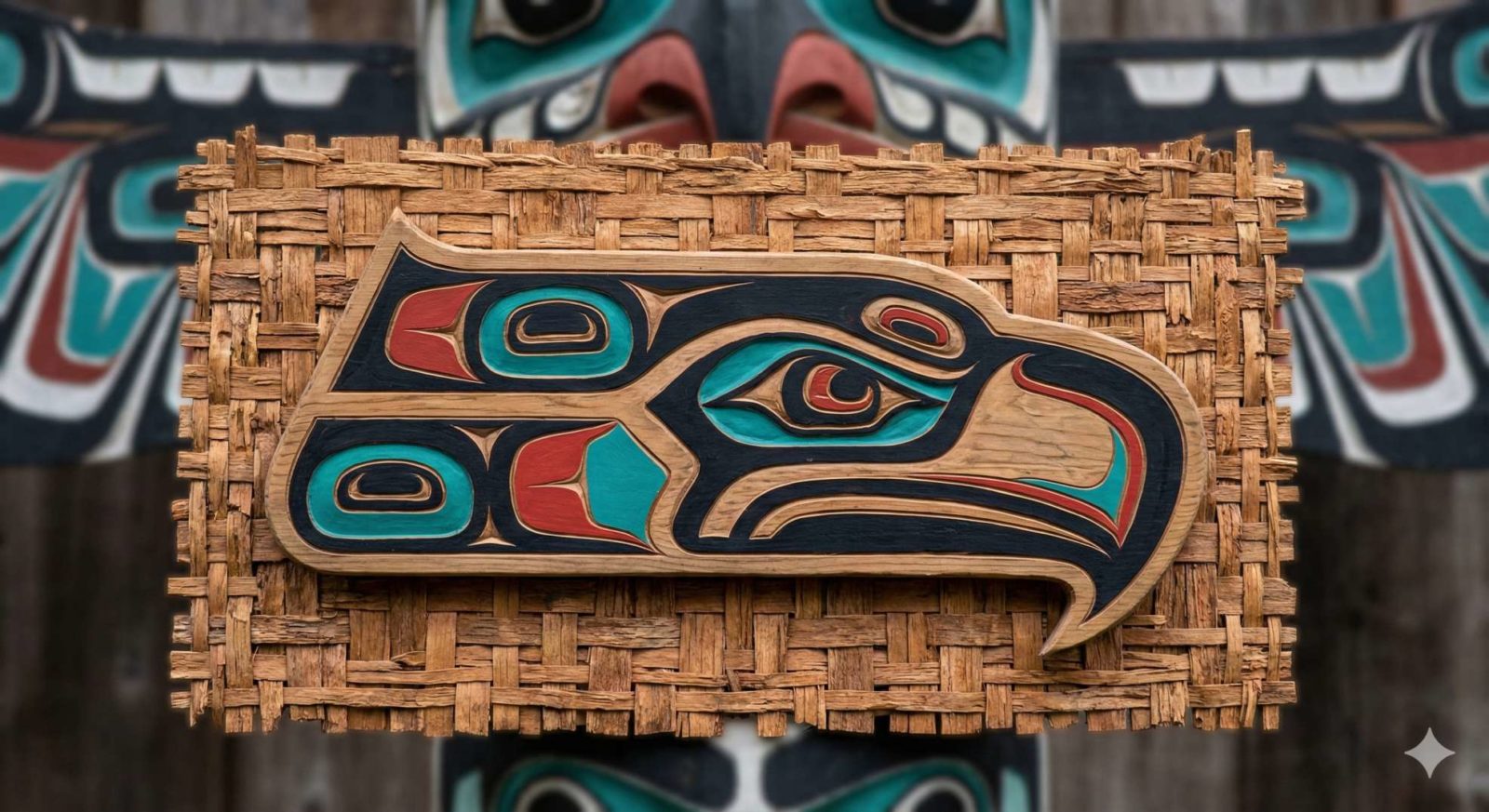
NFL Logo Has Roots in B.C. Indigenous Art
The distinctive Seattle Seahawks logo, one of the most recognizable emblems in the National Football League, has a hidden cultural link to British Columbia’s Indigenous art traditions. Designers who created the logo in the 1970s drew from the rich artistic heritage of Northwest Coast First Nations, particularly a Kwakwaka’wakw transformation mask from Vancouver Island that influenced the team’s visual identity.
From Transformation Mask to Football Icon
The original Seahawks logo, unveiled when the team joined the NFL in 1976, was crafted to reflect the region’s cultural heritage. Rather than depicting an actual bird known as a “seahawk,” the design took key visual elements from a Kwakwaka’wakw eagle or thunderbird transformation mask — a ceremonial piece carved by Indigenous artisans on the northeast coast of Vancouver Island.
Transformation masks play an important role in Northwest Coast Indigenous cultures, especially during potlatch ceremonies. They often depict animals and sacred beings and are designed to open during performances, symbolizing a spirit or ancestor emerging into the human world.
B.C. Artifact’s Journey to National Awareness
The mask that inspired the Seahawks’ logo was photographed and published in mid-20th century art texts, exposing it beyond its original community context to designers and art enthusiasts. Over time, the resemblance between this traditional carving and the team’s emblem was noted by scholars and Indigenous artists alike, reinforcing the connection between professional sports branding and Indigenous artistic tradition.
At one point, the artifact was held at the Hudson Museum in the United States. It attracted renewed attention when it was temporarily exhibited in Seattle, bringing the cultural origin of the NFL team’s logo back into view for fans and the public.
Celebrating Indigenous Influence in Sports
The Seahawks’ use of imagery inspired by Northwest Coast Indigenous art stands out because many tribes in the Pacific Northwest have embraced the logo, seeing in it a reflection of the region’s cultural aesthetics rather than a caricature or stereotype. Some Indigenous artists have even created their own interpretations of the logo in local art styles.
This cultural link is distinct from other sports emblems that use Indigenous symbols without consent or respect, and highlights how Indigenous cultural influence can be respectfully acknowledged in popular culture when done thoughtfully and collaboratively.
Ongoing Conversations on Representation
While the logo’s design roots trace back to traditional Indigenous art of B.C., the story also sparks discussion about cultural recognition and the importance of understanding the origins and meanings behind designs drawn from Indigenous cultures. Acknowledging where inspiration comes from promotes respect, awareness, and deeper appreciation of the artistic traditions that shape visual identity in sports and beyond.
Stay updated instantly — follow us on Instagram | Facebook | X