
Seismic Activity Continues After Major Quake
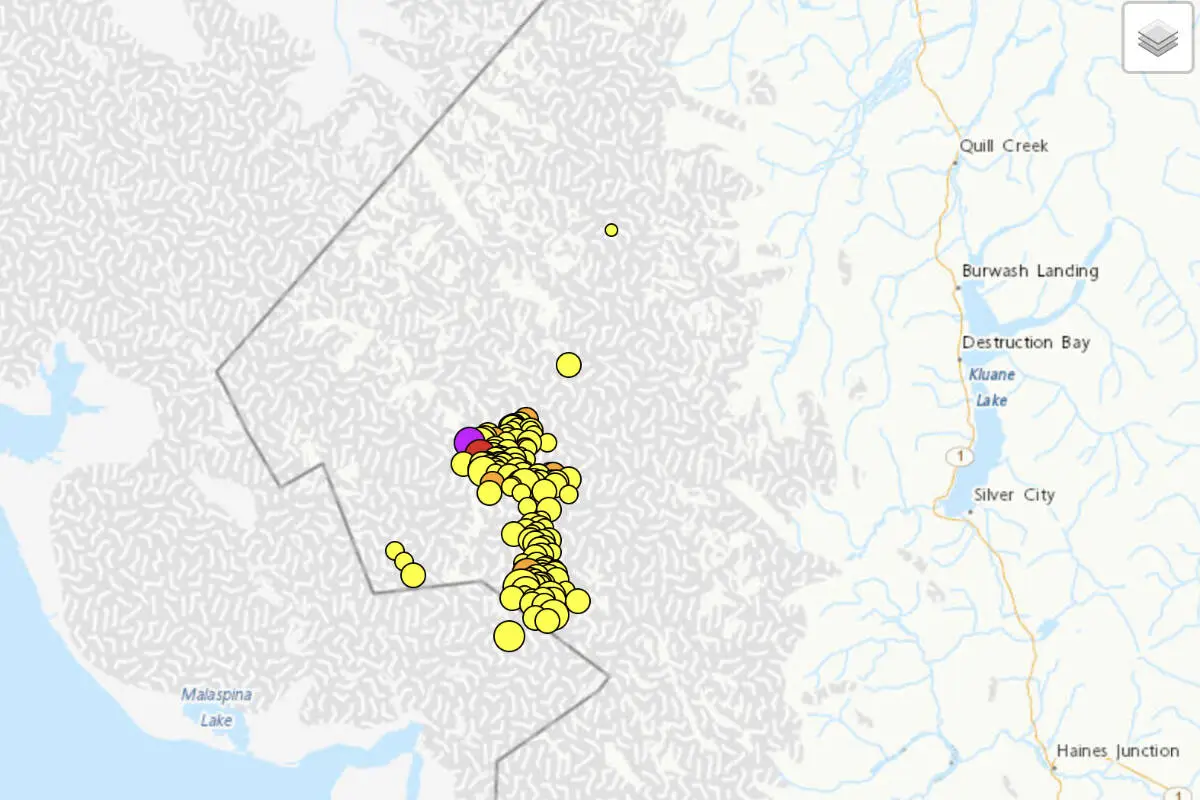
Seismologists report that earthquakes near the Yukon-Alaska border haven’t stopped weeks after a powerful magnitude-7.0 earthquake hit in early December 2025. Residents across southeastern Alaska and parts of the Yukon have continued to feel smaller tremors as the Earth’s crust adjusts to the large shock.
Large Initial Earthquake Triggers Ongoing Aftershocks
The main quake struck on December 6, 2025 in a remote region near the border between Alaska and Canada. Because it was a relatively large event, the sequence of smaller quakes afterward is active and ongoing, a pattern seismologists expect when a major rupture has occurred.
These smaller events, called aftershocks, happen when stress readjusts in the Earth’s crust near the original fault. They often occur close in time and location to the main quake and can go on for weeks or even longer as the ground settles into a new balance.
Recent Aftershocks Recorded Before New Year
In the final hours of 2025, several moderate earthquakes hit the same region near the border, with tremors registering in the range of magnitudes that indicate they were part of this aftershock sequence. Although they were felt lightly in some communities, there were no reports of major damage.
Experts say it’s normal for a large quake to be followed by many smaller ones, and that the sequence will likely continue for some time. There’s no way to predict exactly when each aftershock will occur or how strong it might be, but monitoring continues.
What Aftershocks Mean for Local Residents
Even though the region around the border is sparsely populated, people as far away as Whitehorse and parts of southeastern Alaska reported feeling the shaking. Many described pictures on walls moving or light rattling inside homes during the larger aftershocks.
Seismologists encourage anyone who feels a tremor to report it through Earthquakes Canada’s “Did you feel it?” tool, as this helps build a more detailed picture of how the aftershock sequence is progressing across the wider area.
Stay updated instantly — follow us on Instagram | Facebook | X