
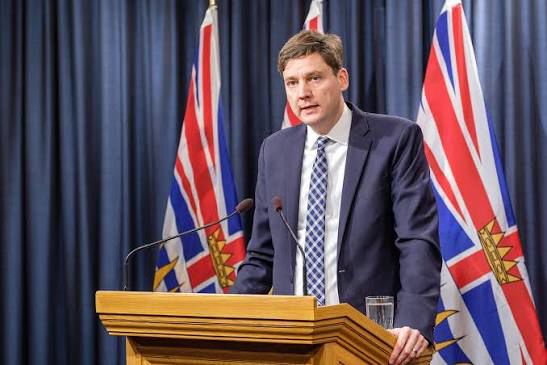
SURREY, B.C. — British Columbia Premier David Eby has announced the creation of a community advisory panel to work alongside police investigating extortion-related crimes, amid growing concern over rising violence targeting businesses and families, particularly within Surrey’s Punjabi Canadian community.
The announcement comes as extortion cases continue to climb across the Lower Mainland, with Surrey emerging as a focal point. As of this week, Surrey Police Service (SPS) has received 46 extortion reports so far this year, including 11 incidents involving shootings. Police say 29 individuals have been threatened, with 17 of them targeted repeatedly.
Speaking Tuesday, Eby said the new advisory group is intended to ensure that victims’ experiences are consistently heard and reflected in police responses, particularly where residents have raised concerns about uneven communication and support.
“I heard stories about families who call in extortion threats and are not met with a consistent response,” Eby said. “That response may vary, and it may not always include the level of service people reasonably expect when they call police for help.”
The advisory panel will work directly with the B.C. extortion task force, which is led by the RCMP and supported by local police agencies. Members of the committee have not yet been publicly named, though Eby said a chair would be appointed imminently.
Critics Call Move Insufficient
Opposition figures quickly criticized the announcement, arguing that the creation of an advisory group does little to immediately curb violence or dismantle organized crime networks.
B.C. Conservatives interim leader Trevor Halford said communities have been calling for stronger action for nearly a year.
“Business owners, families, and workers have been living in fear while the government failed to provide the resources needed to confront these brazen acts of violence,” Halford said, calling the advisory panel “too little, too late.”
MLA Steve Kooner, the opposition critic for Attorney General, echoed those concerns, saying the announcement risks giving residents false hope.
“People are scared,” Kooner said. “They want to know what is being done right now to protect their families and livelihoods. An advisory committee doesn’t put offenders behind bars or shut down criminal networks.”
Police Coordination Under Scrutiny
Multiple task forces have been established to address the surge in extortion cases, including dedicated units in Surrey and Abbotsford, alongside the provincial RCMP-led task force. Some Surrey officers are embedded within the provincial unit, though operational coordination has drawn criticism.
Eby acknowledged concerns about inconsistent communication between the provincial task force and local police agencies, particularly SPS. He said he raised the issue directly with RCMP Commissioner Michael Duheme during a recent meeting in Ottawa.
Duheme is expected to meet this week with Surrey Police leadership and Assistant Commissioner John Brewer, who heads the B.C. extortion task force, to improve coordination.
“The goal is unified communication — not just messaging, but a consistent response to the community,” Eby said.
Surrey Police Chief Norm Lipinski welcomed the advisory panel, emphasizing that long-term solutions must involve community engagement.
“This crisis will not be solved by police alone,” Lipinski said in a statement. “Residents and business owners are asking difficult but necessary questions, and those voices must be part of the solution.”
SPS Staff Sgt. Lindsey Houghton said issuing separate announcements from the provincial task force is longstanding practice, noting that the task force is not the lead investigative agency in all Surrey cases.
“We are not aware of any extortion reports going without a response,” Houghton said, adding that victims dissatisfied with police engagement are encouraged to contact SPS directly for follow-up.
Governance Changes and Calls for Federal Support
In a related move, Eby also announced changes to the Surrey Police Board. Provincial appointments to the board will be allowed to lapse, with future appointments requiring joint agreement between Surrey Mayor Brenda Locke and Public Safety Minister Nina Krieger. The goal, Eby said, is to ensure the board reflects community priorities.
Locke welcomed both the governance changes and the advisory panel. She is currently in Ottawa seeking additional federal resources to combat extortion and renewed her call for the appointment of a national commissioner to address extortion-related violence.
“It’s crucial we amplify the voices of residents and business owners who have been victimized for far too long,” Locke said. “Improved communication and transparency are essential, and this committee is a step in the right direction.”
Premier Urges Police to Act Faster
In a follow-up statement issued just hours later, Eby delivered a blunt message to police leadership: increase arrests and share more information with the public.
Surrey residents, he said, “need more information” about what police are doing to stop extortion-related violence and protect communities.
The advisory panel, Eby emphasized, is not meant to replace enforcement efforts but to ensure policing strategies align with the lived realities of those being targeted.
As investigations continue and violence persists, residents and business owners across Surrey remain watchful, calling for visible action — not just consultation — to restore safety and confidence in their communities.