
Explore 250 years of avalanche deaths in Canada with Avalanche Canada’s interactive map, revealing patterns, history, and key safety insights.
Canada’s Deadliest Snowfalls Tracked in New Interactive Map
Canada’s first recorded avalanche fatalities date back nearly 250 years—and their story might have been lost if not for a brief postscript in an 18th-century letter. In the winter of 1782, missionaries wrote to console the Inuit community of Nain, N.L., recounting a tragedy: “A monstrous body of snow shot all at once down…with all the people in it except one man.”
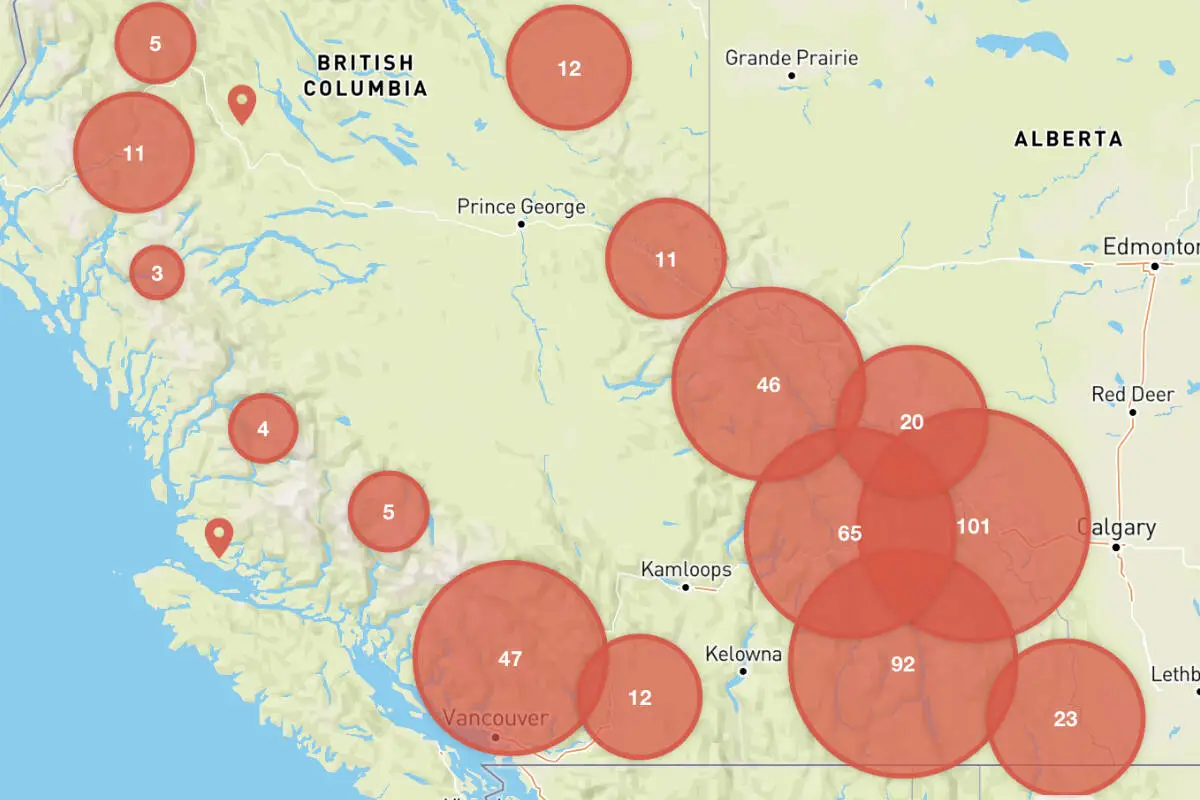
Those 22 lives mark the earliest documented avalanche deaths in Canadian history, now featured in a new interactive map released by Avalanche Canada. The map chronicles every known avalanche-related death in the country, offering a sobering and educational glimpse into Canada’s snowy past.
A Century-Spanning Record of Tragedy
The federally funded project took three years to complete, documenting 559 avalanches that claimed 1,063 lives, from the Nain disaster to the most recent fatalities north of Kaslo, B.C., in March 2025. Gilles Valade, Avalanche Canada’s executive director, explains the map’s purpose:
“Avalanches and avalanche risk are very dynamic. It’s not very predictable. The more information you have, the better it’ll be for the future.”
The interactive tool isn’t just a historical archive—it’s a guide to understanding avalanche patterns, helping those who venture into the backcountry stay safer.
How Avalanche Deaths Spread Across Canada
Avalanche fatalities in Canada have shifted geographically over the centuries. Initially concentrated in Newfoundland and Labrador, Quebec, and New Brunswick, deaths later spread westward as settlers moved into the Rockies.
Early fatalities often occurred at industrial sites, particularly where train tracks or roads were built. British Columbia recorded its first death on Feb. 4, 1885, at Rogers Pass, followed by another two days later during Canadian Pacific Railway construction. Tragically, Rogers Pass also witnessed Canada’s deadliest avalanche on March 4, 1910, when 58 workers—32 of them Japanese laborers—were buried while clearing snow from the tracks.
Some incidents were strikingly random. On Feb. 23, 1957, an Anglican minister driving between Nelson and Kaslo attempted to shovel snow from a highway slide, only to be caught in a second avalanche.
From Industry to Recreation
By the 20th century, avalanche deaths began occurring among recreational backcountry users rather than industrial workers. “Nobody thought 75 years ago that you’d just go into avalanche ranges for fun,” said Valade. The first recorded recreational death occurred Dec. 31, 1937, when a skier perished on Mount Shaffer, B.C. Fatalities increased in the 1950s and 1960s alongside mountaineering and backcountry skiing. Industrial deaths waned, with the last recorded incident in Terrace, B.C., on Jan. 12, 1982.
Today, British Columbia remains the epicenter of avalanche fatalities. While Avalanche Canada’s database excludes names, it notes notable tragedies, including Michel Trudeau in 1998 and the 2023 deaths of two Nelson police officers.
Learning From History to Prevent Future Tragedies
Avalanche deaths have decreased since the 2002-2003 season, when 29 people lost their lives. However, Valade emphasizes the importance of continued research:
“It’s fine to understand what happened in 1937, but what matters is the last 20 years the equipment, the people, the places we go. That’s what we need to learn from.”
The new interactive map isn’t just about memorializing past tragediesit’s a tool to help Canadians navigate the backcountry more safely, armed with the lessons of 250 years of snow and history.
Stay updated instantly — follow us on Instagram | Facebook | X