
From Surplus to Shortfall
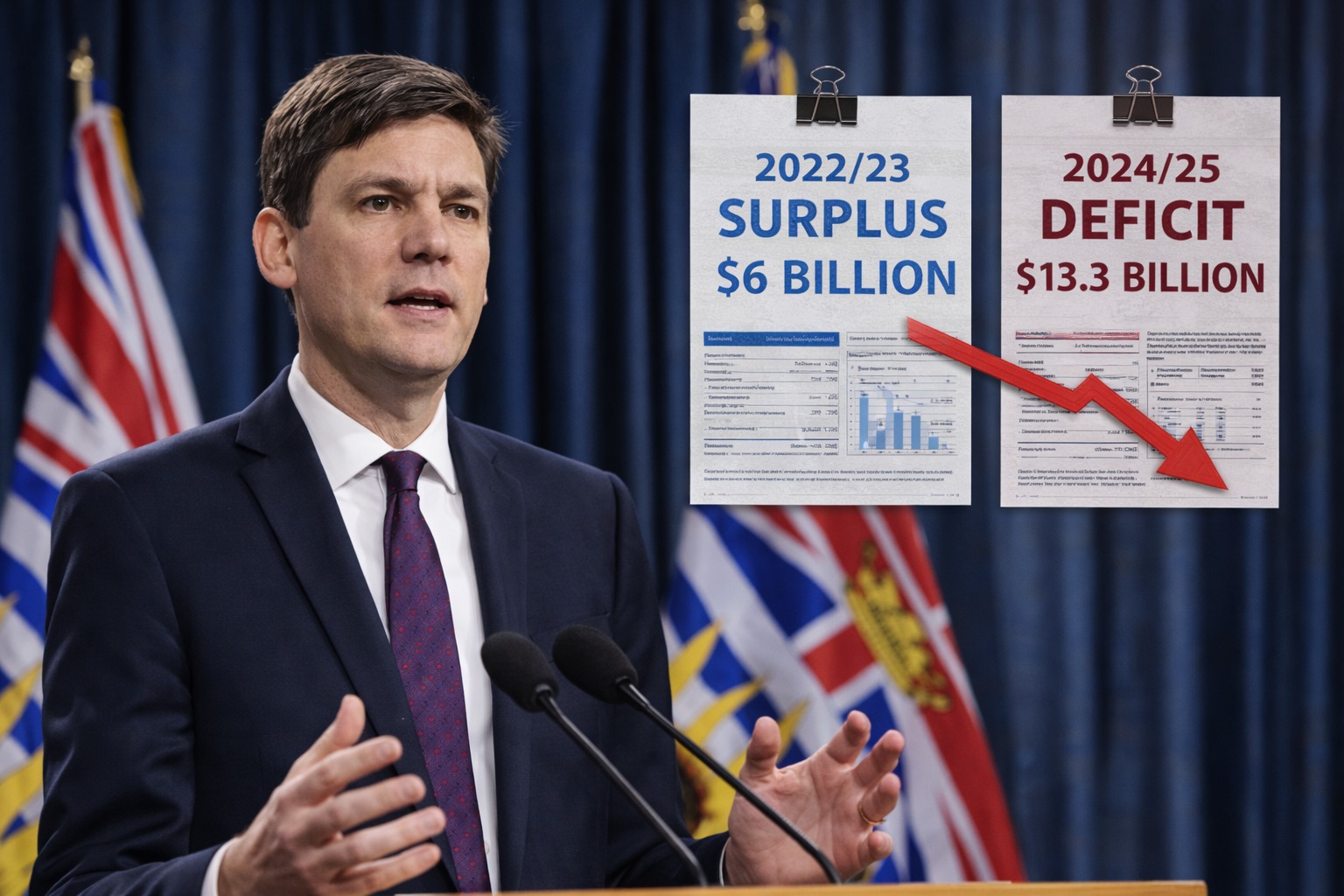
Not long ago, British Columbia posted a $6-billion surplus. Today, the province faces a projected $13.3-billion deficit. That sharp turn has revived old questions about the NDP’s grip on the public purse.
Under Premier David Eby, spending has climbed fast. Supporters say the province must invest in housing, health care and affordability. Critics, however, argue the books are sliding back into the red at an alarming pace.
A Brand Once Repaired
For years, the B.C. NDP worked to shake off its reputation for loose spending. Balanced budgets and surprise surpluses helped rebuild credibility. As a result, the party positioned itself as fiscally responsible while still expanding public programs.
That narrative now faces a fresh test.
The surplus recorded in 2022 stood as proof that disciplined management could coexist with social investment. However, the current deficit projection has changed the conversation.
Why the Numbers Shifted
Several factors sit behind the reversal.
First, program spending has increased across multiple ministries. Health care costs continue to rise. Housing initiatives demand major capital outlays. In addition, affordability measures — including rebates and supports — carry hefty price tags.
Second, economic growth has slowed. When revenue softens and spending rises, deficits follow. Therefore, the fiscal gap has widened quickly.
Political Risks Ahead
Deficits do not automatically spell trouble. Governments often run them during economic slowdowns. Yet large and persistent shortfalls can raise concerns among voters.
Opposition parties have seized on the new numbers. They argue that the government risks undoing years of careful brand repair. Meanwhile, business groups warn about long-term debt levels and borrowing costs.
Even so, the NDP maintains that strategic spending now will protect families and strengthen the economy later.
The Road Forward
The key question centres on sustainability.
Can the province return to balance once major investments taper off? Or will structural deficits become the norm? Much depends on economic growth, revenue trends and spending restraint in future budgets.
For now, the contrast remains stark: a $6-billion surplus has shifted to a projected $13.3-billion deficit in just a few years.
That swing has reopened a debate British Columbia thought it had settled — how much is too much when it comes to public spending?
Stay updated instantly — follow us on Instagram | Facebook | X