

A warning that changed the conversation
Security alliances rarely shift overnight. Yet sometimes a single political signal can trigger months of debate. That is exactly what is now happening across Europe after warnings linked to former U.S. president Donald Trump’s stance on military support and arms cooperation.
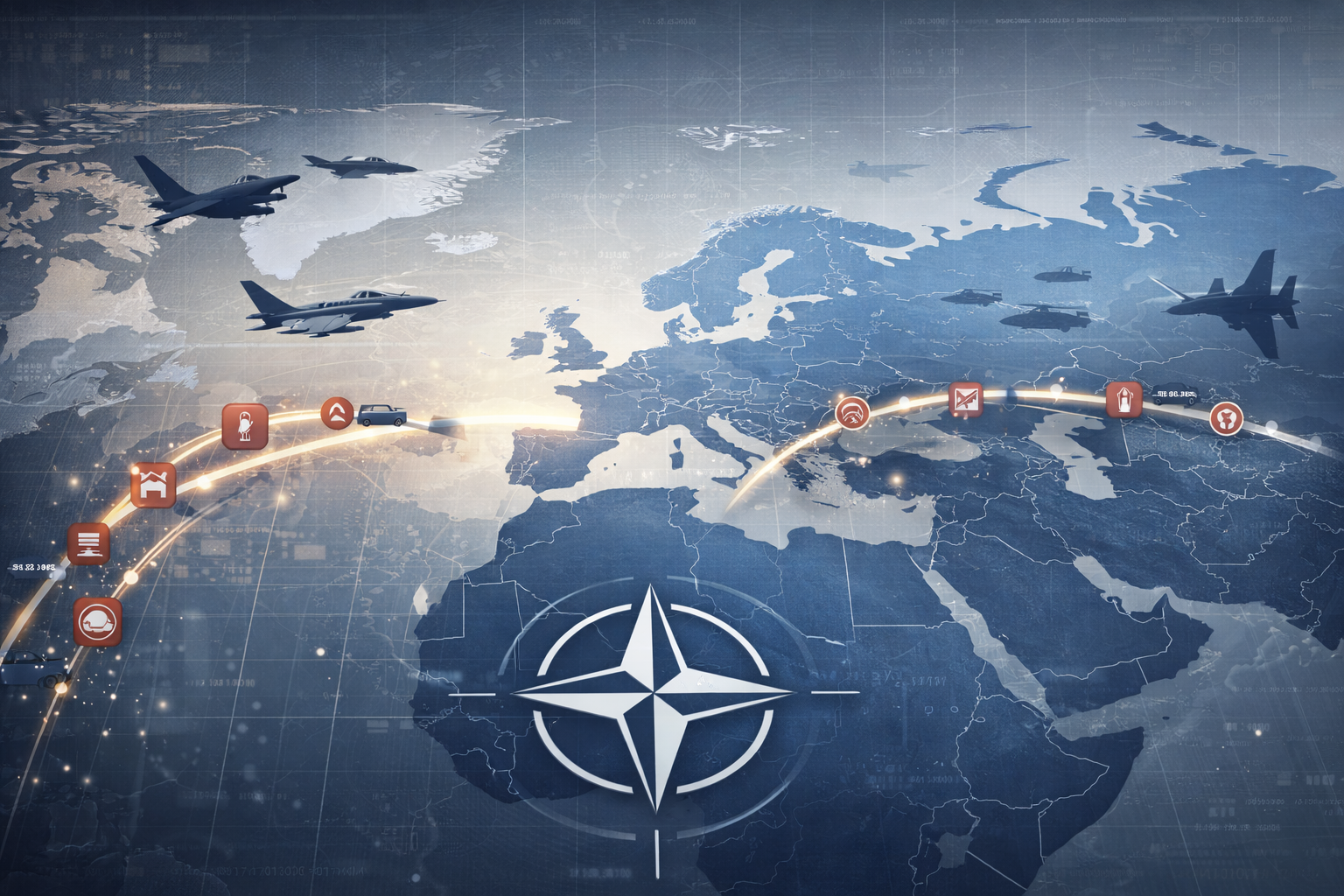
Across NATO capitals, leaders began asking a difficult question: what happens if the United States reduces its defence role?
Because the transatlantic alliance has anchored Western security for decades, even a small hint of uncertainty carries enormous weight. Consequently, European governments are reconsidering how weapons are built, purchased, and supplied. At the same time, Canada has entered the discussion as a potential reliable partner in defence production.
Why Europe suddenly feels exposed
Europe’s security model has depended heavily on American military strength since the Second World War. U.S. troops, intelligence sharing, and weapons systems created a stable umbrella across the continent. However, recent political messaging suggested Washington could scale back commitments or change priorities.
Therefore, European policymakers started examining vulnerabilities. If supply chains rely too heavily on one partner, military readiness could weaken during crises. That concern intensified as Russia’s ongoing war in Ukraine continues reshaping defence planning.
European leaders now want stronger domestic capacity. They aim to produce more ammunition, vehicles, and advanced systems at home rather than importing everything from abroad. Analysts say the goal is not to replace NATO but to ensure continuity even during political change.
Europe has already increased defence spending and cooperation projects to reduce reliance on U.S. equipment.
The defence industry becomes strategic again
For decades after the Cold War, many Western countries reduced military production. Factories closed, contracts shrank, and defence companies consolidated. Efficiency mattered more than capacity.
Today the logic has reversed.
Governments now treat defence manufacturing as strategic infrastructure similar to energy or food supply. Ammunition stockpiles, spare parts, and repair capabilities matter as much as advanced jets. Consequently, policymakers want domestic industries ready for long conflicts rather than short missions.
The European Union has even proposed large funding programs to boost weapons manufacturing and shared procurement.
Furthermore, new policies encourage buying equipment produced within allied regions instead of distant suppliers. The objective is resilience rather than simple cost savings.
Where Canada fits into the picture
Canada is not a European country, yet it occupies a unique position in the alliance network. It belongs to NATO, maintains close ties with the United States, and operates a sophisticated aerospace and defence sector.
Because of that balance, some European officials see Canada as a trusted external partner rather than a dependency risk. Canadian companies already produce armoured vehicles, aircraft components, radar technology, and satellite systems used worldwide.
Therefore, discussions have begun about expanding cooperation. Canada could supply equipment, components, or joint production capacity while still supporting NATO unity. This approach would diversify supply chains without creating political fractures.
In broader strategic planning, Canada has promoted itself as a reliable supplier for Europe’s rearmament efforts amid geopolitical tensions.
The dilemma facing NATO allies
The situation places allies in a delicate balance. On one hand, they want to remain closely aligned with the United States. On the other, they must prepare for uncertainty in democratic politics where leadership priorities can change after elections.
Defence planners therefore focus on redundancy. If one supplier pauses exports, another must fill the gap. If one country shifts policy, collective readiness should remain intact.
Experts say this does not weaken NATO. Instead, it may strengthen it by spreading responsibilities more evenly across members. Shared capacity prevents sudden shortages and reduces pressure on any single nation.
At the same time, officials emphasize cooperation rather than separation. The goal is preparation, not independence from allies.
Industry reaction and economic impact
Defence manufacturers across Europe and North America are already adjusting strategies. Companies are exploring joint ventures, cross-border factories, and technology sharing agreements. These partnerships allow production to continue regardless of political shifts.
Economically, the shift could create thousands of skilled jobs. Aerospace engineering, electronics manufacturing, and cybersecurity sectors would all expand under long-term defence programs.
However, critics warn that increased military production risks escalating global tensions if not paired with diplomacy. Supporters counter that deterrence prevents conflict by signalling readiness.
As governments debate budgets, one reality remains clear: security planning now includes industrial planning.
What this means for the future
The discussion sparked by American political warnings has moved far beyond rhetoric. It has reshaped procurement plans, revived manufacturing policy, and strengthened conversations among middle powers like Canada and European states.
In the coming years, NATO may look less like a structure dependent on one military giant and more like a network of capable partners sharing responsibility. If that happens, defence cooperation could become broader, not weaker.
Ultimately, the shift reflects a simple principle — alliances endure best when every member can contribute meaningfully.
For Europe and Canada alike, the message is clear: security today depends as much on factories and supply chains as on soldiers and strategy.
Stay updated instantly — follow us on Instagram | Facebook | X