

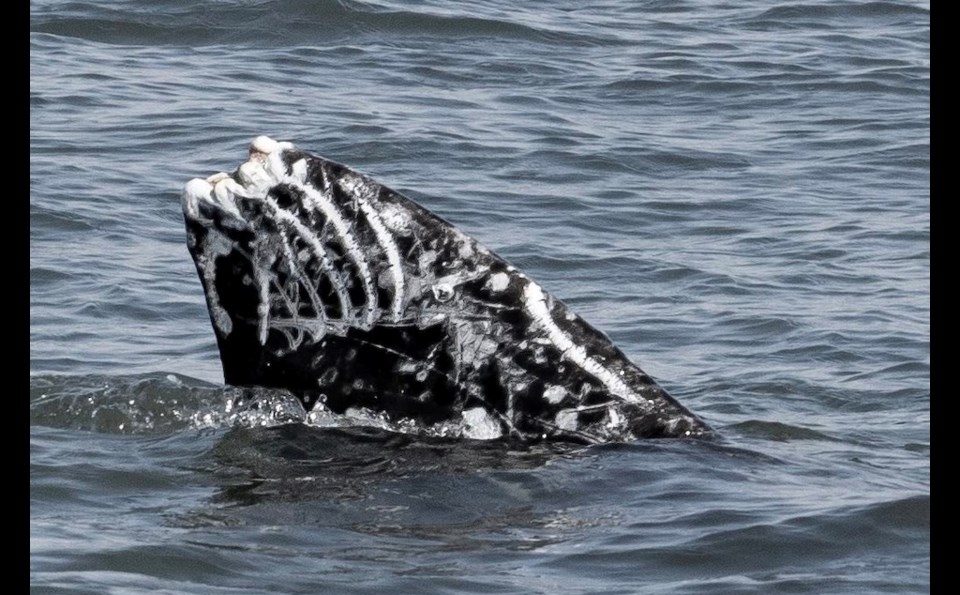
A massive grey whale feeding near Spanish Banks thrills Vancouver watchers. The rare sight highlights the species’ epic migration and fragile status.
Giant Grey Whale Captivates Vancouver Waters
A massive grey whale has turned heads in Metro Vancouver, and locals cannot stop talking about it.
For several days in March 2026, the enormous marine mammal cruised and fed near Spanish Banks. Even better, wildlife watchers captured photos and shared them widely online. As a result, the rare sight sparked excitement across the Lower Mainland.
The whale’s dramatic heart-shaped blow gave away its identity right away. That signature puff of mist is one of the easiest ways to spot a grey whale at sea.
Wildlife Watchers Capture the Moment
Local wildlife enthusiast Alex Cole first shared photos of the whale in the Facebook group Howe Sound and Sea to Sky Wildlife Sightings. Soon after, the images began circulating among ocean lovers across the region.
Cole described the moment with clear excitement.
“The distinct heart-shaped blow of a grey whale is unmistakable.”
She spotted the whale feeding in the waters near Spanish Banks and Burrard Inlet. Because of calm conditions, the iconic spray shape showed up perfectly in photos.
Meanwhile, other members of the group reported sightings in recent weeks. In fact, another grey whale appeared near Squamish earlier this season. Therefore, the sightings suggest the species has started returning to local waters.
A Marine Giant With an Epic Migration
Grey whales are among the most impressive travellers in the animal kingdom.
Every year, these giants migrate thousands of kilometres along the Pacific coast. Typically, they breed in warm lagoons in Baja California, Mexico. Afterwards, they head north along the coastline.
Some whales continue as far as Alaska and even Russia. In total, their round-trip journey can reach 16,000 to 23,000 kilometres.
That massive trek makes their arrival in B.C. waters an exciting seasonal event.
Built for Coastal Waters
Grey whales often stay close to shore, which makes them easier to spot than many other whales.
Most swim in waters less than 60 metres deep and usually remain within 10 kilometres of land. Because of this behaviour, beachgoers and boaters sometimes get lucky and see them feeding.
Their appearance is also distinctive. Grey whales show mottled shades ranging from dark charcoal to pale grey. In addition, barnacles and parasite scars often cover their skin, giving them a rugged texture.
Despite that rough look, these animals are extraordinary in size. Adults can grow up to 15 metres long and weigh around 41,000 kilograms. Only humpback whales visiting the region grow larger.
Feeding Stop for a Special Group of Whales
The whale spotted near Vancouver may belong to a small group known as the “sounders.”
This group includes roughly a dozen eastern North Pacific grey whales. During their northward migration, they break away from the main route and pause to feed.
Typically, they gather in North Puget Sound between March and May. However, the recent sighting suggests Vancouver’s waters may also serve as a feeding stop.
While here, they hunt for ghost shrimp buried in muddy seabeds. These tiny creatures provide a rich meal during the long migration north.
A Species Still at Risk
Although grey whales have recovered from historic whaling, their population still faces challenges.
The eastern North Pacific grey whale is considered a species at risk. Boat traffic, pollution, and changing ocean conditions all threaten their survival.
Because these whales often feed in shallow coastal waters, boat strikes remain a serious danger.
For that reason, marine authorities urge people to stay cautious around whales. Boaters must slow down and keep at least 100 metres away. Anyone who gets too close could face fines of up to $100,000 under Canada’s Fisheries Act.
A Rare and Thrilling Vancouver Sight
Vancouver’s waters have seen plenty of marine excitement recently. Transient orcas have lingered in the harbour, and even a great white shark appeared off the B.C. coast earlier this year.
Still, the grey whale’s visit stands out.
After all, few sights rival the moment when a 15-metre giant surfaces and releases that unmistakable heart-shaped mist into the coastal air.