








New Name Reflects Indigenous Heritage
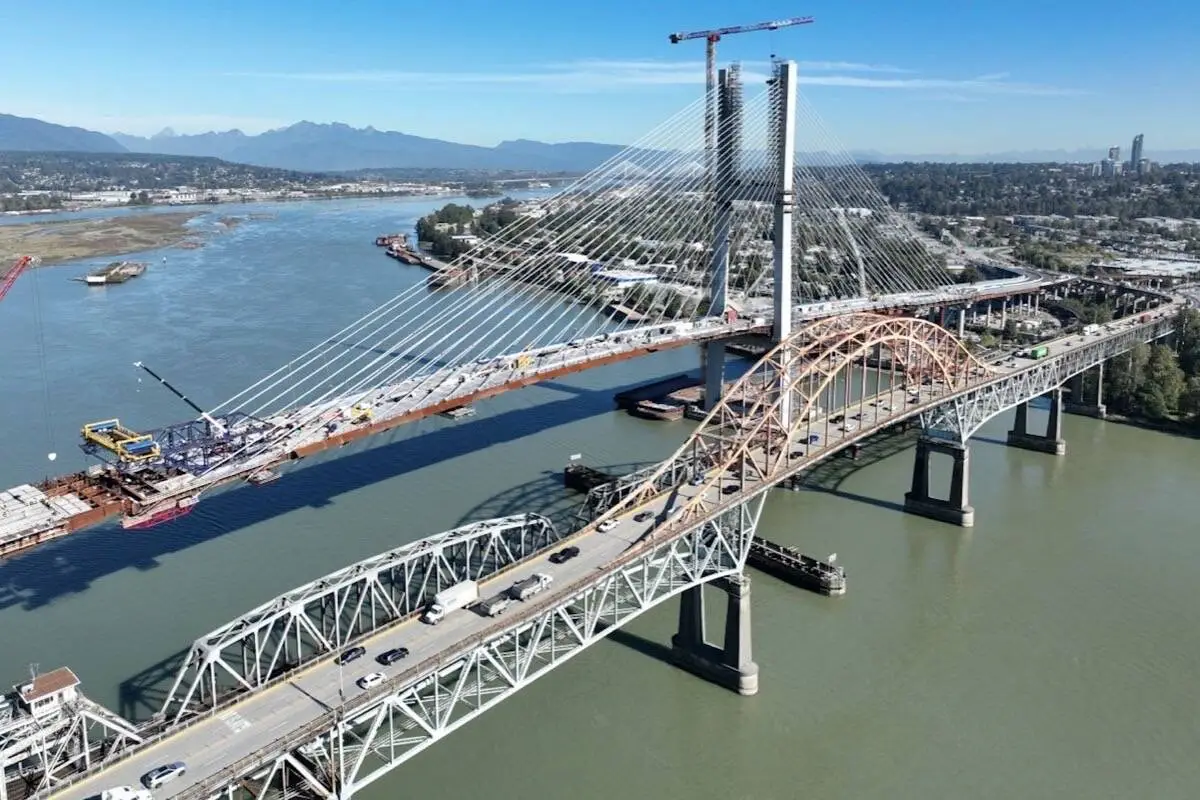
The replacement for the Pattullo Bridge has been officially renamed staləw̓asəm Bridge a name given by the Musqueam Indian Band and Kwantlen First Nation. The name comes from the hən̓q̓əmin̓əm̓ language and means “a space where you can view the river,” or “riverview.”
Officials say this name honours First Nations’ deep historical and current connections to the land. The bridge crosses what once was the village site of qiqéyt, near historic reserves now overlapped by the construction site.
What the New Bridge Offers Safety and Modern Design
The new crossing is a four-lane, toll-free bridge designed with modern standards in mind. It includes a centre median barrier and barrier-separated walking and cycling paths on both sides.
Compared with the old Pattullo span opened in 1937 the new bridge aims to improve safety, handle future growth, and offer better infrastructure for pedestrians, cyclists, and motorists alike.
The design also allows for a possible future expansion to six lanes if demand rises.
Release Timeline When the Bridge Opens
Construction crews have already connected the main span and are completing final paving and works.
According to the provincial update, traffic will begin shifting to the new staləw̓asəm Bridge in phases, with the first northbound lane expected to open around December 24, 2025.
Full opening of all four lanes is projected by February 2026, although some ramps and connecting roadwork may extend into mid-2026.
Once traffic moves to the new span, the old Pattullo Bridge will be removed over a period of up to two years.
Why This Matters Regionwide Impact and Cultural Recognition
The completion of staləw̓asəm Bridge marks a major upgrade to a critical Fraser River crossing between Surrey and New Westminster. The project promises smoother travel, safer commuting, and dedicated paths for walking and cycling a big shift for a route long criticized for narrow lanes and safety issues.
Beyond infrastructure, the renaming of the bridge represents a step toward recognizing and honouring Indigenous history and presence in the region. Including the hən̓q̓əmin̓əm̓ name on signage and art installations along the bridge supports language revitalization and reflects a broader commitment to reconciliation.
Stay updated instantly — follow us on Instagram | Facebook | X











Leave a comment