
Vancouver is installing hundreds of temporary cameras for the 2026 World Cup, sparking safety benefits and privacy concerns.
Vancouver Prepares for World Cup with Temporary Cameras
Vancouver is gearing up for the 2026 FIFA World Cup by installing hundreds of temporary surveillance cameras. City officials say the move is all about keeping fans safe, but privacy experts warn that it raises serious questions about who sees the footage and how it’s used.
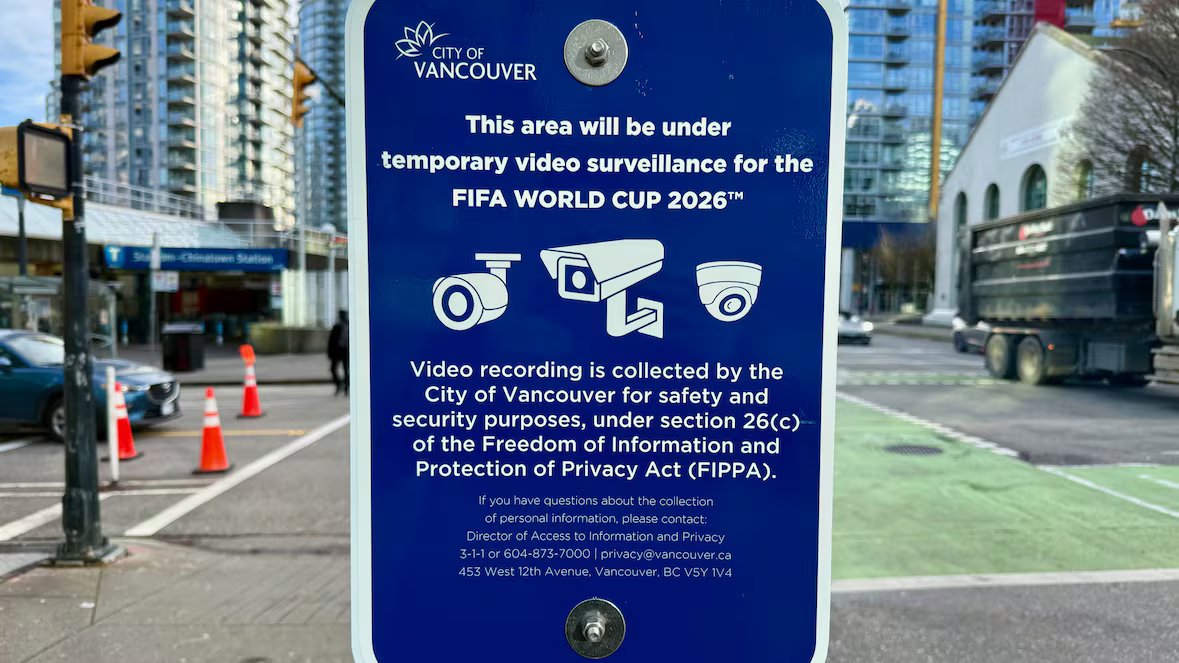
With an estimated 350,000 visitors expected at B.C. Place during the tournament, security will be under the microscope. Already, blue signs near the stadium are alerting the public that cameras are coming, prompting curiosity—and concern—about their scope.
How Many Cameras and Where They’ll Be
Approximately 200 cameras will be placed in key locations supporting World Cup events, including B.C. Place, the FIFA Fan Festival at the PNE, and official training sites. The Vancouver Host Committee says the cameras are being tested now but won’t be active until the tournament begins. During testing, all footage is blurred to protect privacy.
Officials also confirm that the cameras are strictly temporary and will be removed after the World Cup concludes.
Who Can Access the Footage?
According to the Host Committee, only authorized personnel will view the recordings, and all handling will follow city policies and provincial privacy laws. Footage may also be shared with FIFA and its security contractors, which has triggered concern among privacy advocates.
“FIFA is not a Canadian public body,” said Aislin Jackson from the B.C. Civil Liberties Association. “Once data leaves Canada, other countries’ privacy laws may not be as protective. That’s a real risk, especially as AI technology can extract sensitive information from images.”
Jackson added that even public footage can include sensitive details like biometric data, making privacy safeguards crucial.
New Bylaws Support the World Cup
These cameras arrive alongside a temporary bylaw approved by Vancouver City Council in November. The bylaw governs street vending, entertainment, and promotional activities around World Cup sites, with fines up to $1,000 for violations.
The regulations will run from May 13 to late July 2026, covering a two-kilometre radius around B.C. Place and a 100-metre radius around the Fan Festival.
Kristen Thomasen, a law and robotics expert, warned that event-driven surveillance can change how people behave in public spaces. “Cameras in these areas signal that you’re expected to act according to FIFA’s rules, not just your own. That can subtly shift public norms,” she said.
Lessons from Past Major Events
This isn’t Vancouver’s first major security expansion. During the 2010 Winter Olympics, the city deployed nearly 1,000 cameras, including 90 city-managed units. Similar measures have appeared in other host cities, like London for the 2012 Olympics and Paris for the 2024 Games.
Privacy advocates caution against “surveillance creep,” where temporary measures outlive their original purpose. Jackson explains, “Extraordinary measures for extraordinary events can reset expectations about privacy, leading to long-term intrusions.”
The Vancouver Host Committee stresses that all cameras will be removed once the tournament ends. Still, the debate over public safety versus privacy is already heating up as fans and residents prepare for the world’s biggest soccer spectacle.
Stay updated instantly — follow us on Instagram | Facebook | X