
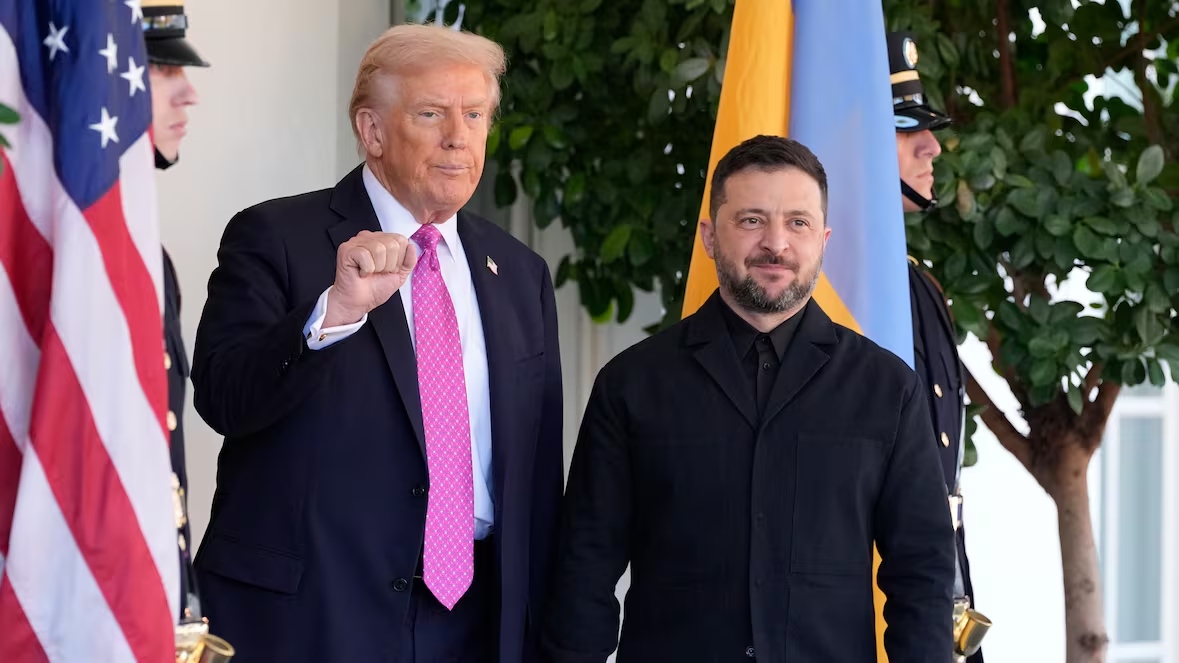
Zelenskyy, Trump to meet in Florida for high‑stakes talks
The phrase “Zelenskyy, Trump to meet in Florida” would have sounded unlikely only months ago. Yet on Sunday the two leaders will sit down in Palm Beach for what could become the most consequential meeting of the Ukraine‑Russia war so far.
According to Zelenskyy, the main goal is a peace framework that both sides can live with, and that Ukrainians themselves will accept. He says negotiators have drafted a 20‑point plan and that “about 90 per cent” is ready. The remaining questions are the hardest ones: security guarantees, territory and money.
The talks will take place in Florida, reportedly at Trump’s Mar‑a‑Lago estate. Zelenskyy describes the agenda as broad. It ranges from long‑term defence assurances for Kyiv to an “economic agreement” that could help rebuild Ukraine’s shattered infrastructure. However, he cautions that nothing may be finalized this weekend.
A possible referendum on peace
What sets this round of diplomacy apart is Zelenskyy’s new openness to a nationwide vote. If he and Trump can reach a deal, he says he is prepared to bring the peace framework to a referendum.
That announcement raises both hope and risk. On one hand, a vote would give Ukrainians direct ownership of any compromise reached in Florida. On the other, it would expose deep divides over territory, security and justice after almost four years of brutal war.
The focus keyword “Zelenskyy, Trump to meet in Florida” now carries the weight of millions of people who have lost homes, relatives and limbs. Any proposal that includes troop withdrawals, demilitarized zones or changes to borders will face fierce debate inside Ukraine and abroad.
Europe and Canada watch closely
Zelenskyy insists the United States cannot be the only outside power at the table. He wants European leaders involved in the process, though he doubts they can join Sunday’s meeting on short notice. Still, he says Ukraine must “find some format” soon in which Europe sits alongside Kyiv and Washington.
On Friday he spoke with Canadian Prime Minister Mark Carney, who reaffirmed Ottawa’s backing. The Prime Minister’s Office says Carney stressed the need to keep pressure on Moscow to negotiate in good faith. For Ukraine, that support matters as it weighs possible concessions.
Moscow signals interest but not retreat
While headlines focus on “Zelenskyy, Trump to meet in Florida,” Russia is also engaged in quiet talks with U.S. representatives. Kremlin spokesperson Dmitry Peskov confirms that Russian presidential envoy Kirill Dmitriev recently met American envoys in Florida and agreed to keep the dialogue going.
Yet Moscow shows no sign of accepting one key element of Ukraine’s position: a Russian pullback from occupied land. Officials still demand that Kyiv surrender the remaining territory it controls in the Donbas, even though Russia has already captured most of Luhansk and about 70 per cent of Donetsk.
Russian Foreign Affairs Ministry spokesperson Maria Zakharova speaks of “slow but steady progress” in the wider talks. However, that progress has not reached the front lines, where missiles, drones and guided bombs continue to fall.
War grinds on as diplomacy advances
Friday brought another grim list of attacks. A guided aerial bomb struck a busy road in Kharkiv, killing two people and injuring six more. In the Zaporizhzhia region, another bomb hit a house, leaving one dead and three wounded. A missile strike on Uman wounded six.
Overnight drone attacks on Mykolaiv knocked out power in parts of the city, while strikes on Odesa damaged energy and port infrastructure. These assaults fit a familiar pattern: Russia aims to break Ukraine’s grid and make winter itself a weapon, cutting heat, light and clean water.
Kyiv continues to push back with long‑range strikes of its own. Ukrainian forces say they hit the Novoshakhtinsk oil refinery in Russia’s Rostov region using U.K.-supplied Storm Shadow missiles. Officials reported multiple explosions and a major fire, with at least one firefighter injured. Ukraine’s strategy is clear. By targeting refineries, it hopes to dent the oil revenue that funds Russia’s war machine.
What a Florida deal might look like
Zelenskyy has already floated one potential element of the peace framework. Earlier this week he said Ukraine could withdraw troops from the eastern industrial heartland if Russia also pulls back and the zone becomes demilitarized under international supervision.
Such a plan would require enormous trust and robust monitoring, both of which are in short supply after years of atrocities and broken promises. Critics worry that any demilitarized buffer could simply give Russia time to rearm. Supporters argue that without bold steps, the war could drag on indefinitely.
This is the backdrop as Zelenskyy, Trump to meet in Florida under the gaze of allies, critics and millions of displaced civilians. The stakes stretch far beyond the ballroom where they will sit. A breakthrough could shift the course of the war; a misstep could deepen divisions at home and abroad.
For now, Ukrainians wait under sirens and flickering lights, watching Florida’s palm trees on their screens and wondering whether this meeting will finally bring them closer to a just peace—or simply mark another chapter in a conflict that refuses to end.
Stay updated instantly — follow us on Instagram | Facebook | X