

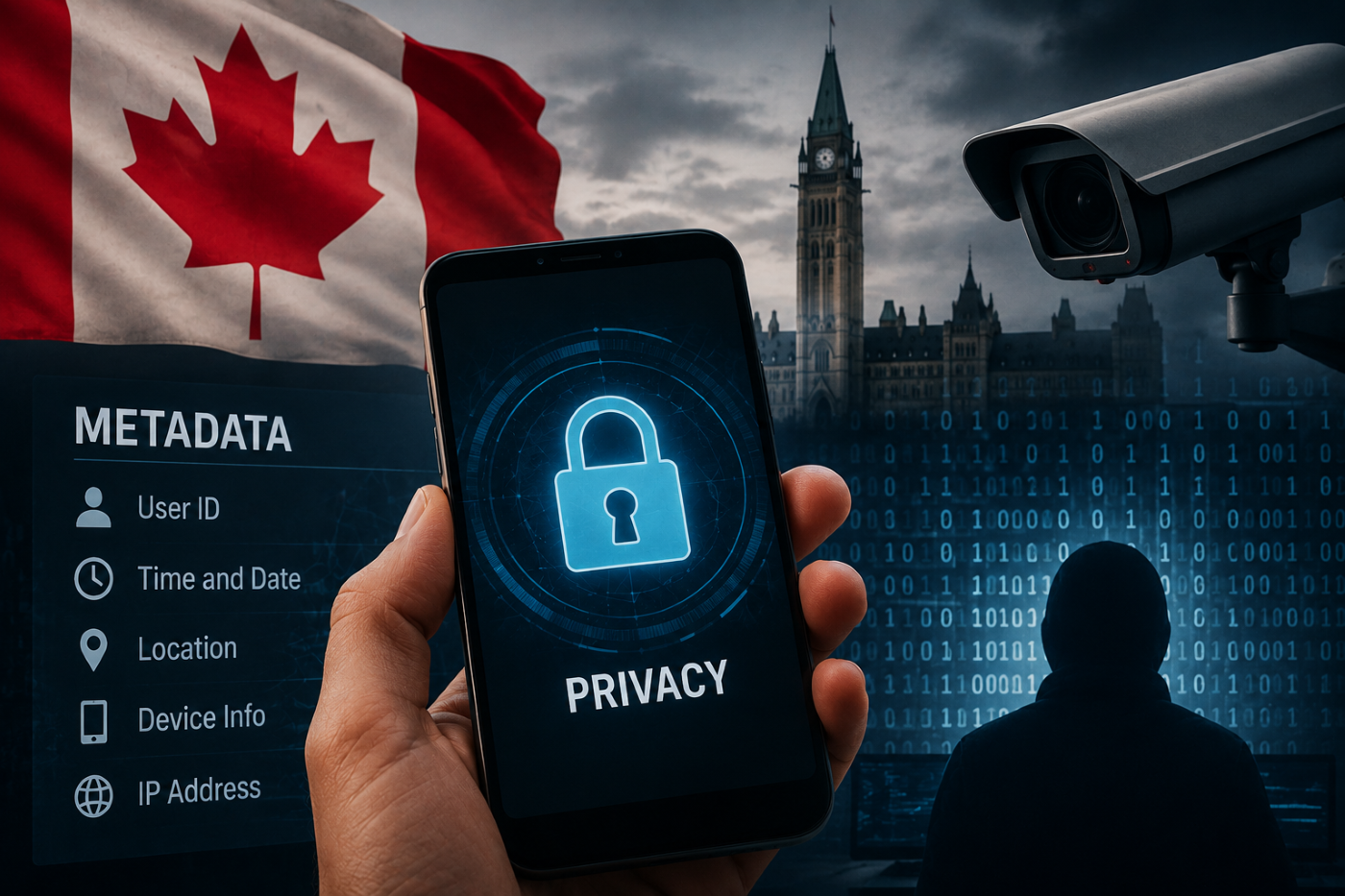
What Is Canada’s Metadata and Lawful Access Debate?
Canada’s proposed lawful access legislation is drawing national attention as concerns grow over how digital information could be collected and accessed by authorities.
The debate largely focuses on “metadata,” which refers to information connected to online activity — such as phone numbers, locations, IP addresses, timestamps, and communication patterns — rather than the actual content of messages. ()
Supporters of the legislation say updated digital investigation tools are necessary for law enforcement agencies to address organized crime, cybercrime, exploitation, and national security threats in the modern online environment. ()
At the same time, critics argue the proposals could significantly expand surveillance capabilities and weaken privacy protections for ordinary Canadians. ()
Why Privacy Advocates Are Concerned
One of the biggest concerns surrounding the proposed legislation involves metadata retention requirements.
Under parts of the proposed framework, certain electronic service providers could be required to retain metadata for extended periods of time, potentially up to one year. ()
Privacy experts argue that even without message content, metadata can reveal highly detailed information about a person’s life, including movement patterns, social relationships, routines, and online behaviour. ()
Civil liberties organizations and digital privacy advocates have also raised concerns about possible government overreach, cybersecurity risks, and the long-term impact on Canadians’ digital rights. ()
Government Says Changes Target Serious Crime
Federal officials say the legislation is designed to modernize investigative tools while still maintaining legal safeguards and judicial oversight. ()
The government argues that law enforcement agencies are increasingly facing challenges investigating criminal activity conducted through encrypted apps, online platforms, and digital communication systems.
Officials have stated that the proposed tools are aimed at addressing issues such as organized crime, human trafficking, online exploitation, and terrorism-related investigations. ()
Government representatives also say certain parts of the legislation would still require court approval and judicial authorization before more detailed personal information could be accessed. ()
Tech Companies and Privacy Experts Push Back
The debate has expanded beyond Canada, with some technology companies and cybersecurity experts publicly criticizing the proposed legislation.
Several digital privacy advocates argue that weakening encryption or increasing mandatory data retention could create broader security vulnerabilities affecting millions of users. ()
Some VPN providers and encrypted communication services have even warned they may reconsider operating in Canada if stricter lawful access requirements are introduced. ()
The issue is now becoming part of a larger international debate about balancing public safety, cybersecurity, and digital privacy rights.
Canadians Increasingly Focused on Online Privacy
As more aspects of daily life move online, concerns about digital privacy continue growing among Canadians.
From banking and healthcare to messaging apps and social media platforms, large amounts of personal information are now stored digitally.
Experts say future discussions around lawful access laws, encryption, surveillance, and cybersecurity will likely continue shaping Canadian politics and technology policy for years to come.
Stay updated instantly — follow us on Instagram | Facebook | X
For any issues or concerns, please contact us at issue@surreyspeak.com.
Have a local story or update to share? Become a Citizen Journalist or volunteer with Surrey Speak—your voice matters in shaping local news.
We believe AI is a powerful, positive tool that supports creativity and responsible journalism.
Contact: marketing@surreyspeak.com